
A Comprehensive Guide to Car Park Safety Measures
Car parks can present a range of safety risks if not properly designed, maintained and monitored. For organisations and businesses that provide car parking facilities, it is important to understand the potential hazards and mitigate the risks. This article provides an overview of key car park safety considerations and measures that can be implemented to help create a safer parking environment.
Table of Contents:

The Main Car Park Safety Risks
Poorly designed car parks can create unnecessary hazards. Issues like tight corners, narrow lanes, poor visibility around blind spots, and inadequate space at junctions and entrances/exits can make manoeuvring difficult and increase the risks of collisions.
Steep ramps and slopes can also pose problems.
Car parks should be designed with safety as a priority, providing adequate space for vehicles to move around easily.
The main design risks are as follows:
Poor signposting
Clear signs and markings are essential in car parks to regulate traffic flow and direct drivers safely around the facility. Signage should clearly indicate speed limits, pedestrian walkways, parking bays, disabled spaces, entrance/exit points and payment areas.
Lack of appropriate signposting can result in confusion and unsafe driving.
Visibility
Poor visibility creates hazards for both drivers and pedestrians.
- Car parks should have adequate lighting throughout, avoiding overly dark corners or underground levels.
- Pillars, walls and other structures should be designed to maximise sight lines and minimise blind spots.
- Convex mirrors can provide visibility around difficult corners.
Good visibility assists drivers in manoeuvring safely and spotting pedestrians.
Congestion
Overcrowded car parks force vehicles into tight spaces, making collisions more likely. They also increase risks for pedestrians navigating between stationary and moving cars.
Car parks should provide adequate spaces for normal usage levels, with overflow options at peak times. Efficient entrance/exit points, lane markings and signposting can also help maximise circulation and space.
Security or parking attendants can be used to direct traffic during busy periods.
Speeding
Drivers speeding through car parks raise the risks of collisions with other cars and pedestrians. Clear speed limit signs should be installed and enforced. Speed humps, rumble strips and chicanes can help slow vehicles in key areas.
CCTV monitoring can assist in identifying speeding drivers. Clamping or fining policies could be introduced as deterrents.
Insufficient parking spaces
A lack of adequate parking spaces leads to frustration for drivers and unsafe practices like double parking or parking in non-designated areas such as disabled parking bays.
Car parks should be designed with sufficient capacity for normal usage levels, with contingency plans for special events or peak times. Options like additional temporary parking areas, efficient layouts and attendants to direct cars can help maximise spaces.
Personal safety risks
Poorly lit or isolated car parks can make some users feel vulnerable to crime. CCTV, security patrols and help points can provide reassurance.
Clear sightlines and avoidance of hidden corners reduces spots where assailants could lurk unseen. Access control systems can regulate who enters a car park. Parking near exits or supervised areas also provides safety.

The Importance of Car Park Pedestrian Safety
Pedestrians are very vulnerable in car parks, which is why designing for pedestrian safety is critical.
- Clearly marked walkways should segregate pedestrians from vehicles.
- Speed limits, signage and road markings raise driver awareness.
- Barriers and railing prevent pedestrians from taking shortcuts through parking areas.
- Crossing points should have clear visibility for both pedestrians and drivers.
- Adequate lighting is vital, as is CCTV monitoring of blind spots.
Regular maintenance checks should ensure walkways are unobstructed.
Car Park Health and Safety Regulations
There are specific health and safety laws governing car park management in the UK.
Key legislation includes the Workplace (Health, Safety & Welfare) Regulations covering issues like lighting, maintenance, ventilation and cleanliness. The Traffic Signs Regulations and Safety at Street Works and Road Works Code of Practice also apply.
Organisations have a legal duty to identify and mitigate risks. Carrying out regular risk assessments and implementing control measures is essential. Parking facilities should be designed to relevant standards like the British Parking Association’s approved Safer Parking Scheme.
Failing to meet regulations can result in enforcement action.
Essential Car Park Safety Equipment
Some key equipment and security systems that can help boost car park safety.
- Barriers, bollards and railing control vehicular access and protect pedestrians.
- Speed humps, chicanes and rumble strips slow traffic.
- Convex mirrors increase visibility at blind spots.
- Signage must clearly indicate rules, directions and hazards.
- Payment machines should be well-lit and CCTV monitored.
- Help points provide direct access to assistance.
- Good lighting is vital, including at entry and exit points.
- Automatic number plate recognition systems can enhance access control and security.
A Look at Barriers & Bollards for Car Parks
Safety barriers and bollards are essential in car parks to separate pedestrian walkways from parking areas.
Barriers
Common types of barriers include handrails, guardrails, bollards and chain-link fencing. They should be clearly visible but not themselves create a hazard. Key factors are height, strength and spacing between uprights.
Arm barriers are a common type of car park safety barrier. They use a mechanical arm that can be quickly raised or lowered to control vehicle access. Arm barriers are highly adjustable and can be fitted with features like barcode scanners or traffic lights. They allow car parks to securely regulate entry and exit points and separate pedestrians from vehicles.
Manual arm barriers require human intervention for operation, necessitating a parking attendant to physically raise and lower the barrier, which can lead to delays during peak hours and increased labor costs. Conversely, automatic arm barriers utilise electronic mechanisms to facilitate seamless, user-driven access.
For entrances where height clearance is also a concern, a swing height restrictor offers a solution to deter unauthorised high-sided vehicles.
Swing Gates
Swing gates are also an excellent solution for securing car parks, particularly where occasional access control is required. These robust, manually operated gates provide full-width coverage to prevent unauthorised vehicle access while allowing flexible entry for authorised users.
Manufactured from durable galvanised steel, our heavy-duty swing gate is designed to withstand the elements and reduce maintenance needs. iT can be locked in both open and closed positions for added security, making it perfect for commercial and industrial properties.
Bollards
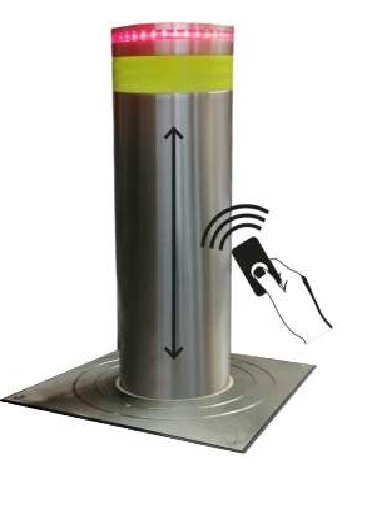
Security bollards are sturdy upright posts often used near building entrances and around pedestrian areas to prevent vehicle access. They are typically made of concrete, metal or strong plastic. For commercial car parks, retractable or removable bollards are ideal. These allow access when needed for delivery vehicles or authorised cars. Removable bollards can be unlocked and taken away during certain hours. Retractable models sink into the ground when not needed.
Brightly painted or reflective bollards are best for visibility. Commercial bollards should be sturdy enough to withstand vehicle impact, especially if the bollards are in council-operated areas. For larger properties, incorporating bollards into a broader perimeter security strategy can significantly enhance protection against unauthorised vehicle access.
Bison Security offers a range of security posts and bollards, speed ramps, static hoops and arm barriers. We also offer a full installation service.
Why Car Park Inspection and Monitoring is Essential
Regular inspection and monitoring is vital to identify and address car park safety risks proactively. Daily visual checks can spot basic issues like debris, lighting failures or obstructions that need immediate attention. More formal recorded inspections on a weekly or monthly basis should cover all aspects of the facility from road surfaces, drainage, markings, signage and barriers to CCTV, access systems and help points. Any necessary repairs or replacements can then be scheduled.
High-risk areas need the most frequent checking. Usage levels should be monitored to anticipate congestion issues. Records of all inspections demonstrate compliance and support ongoing safety improvements.
Ensuring car park safety requires consideration across multiple areas. By implementing a careful car park safety management plan, organisations can create facilities where employees and visitors can park securely and navigate safely.
Contact us today if you’d like more information on our range of security and traffic management products.
Or just browse our collection of commercial security measures by clicking the button below!