UK Vehicle Attack Statistics 2026: Ram Raids & Hostile Vehicle Attacks
Vehicles have long been used to facilitate organised crime, particularly through ram raids targeting retail premises, cash machines, and high-value commercial properties. In more recent years, they have also been deliberately used as weapons in terrorist attacks against pedestrians, public spaces, and critical infrastructure. Although the motives behind these incidents differ, both exploit unrestricted vehicle access and demonstrate the devastating impact a vehicle can have when used maliciously.
In this article, we examine the latest available evidence on vehicle attacks in the UK, covering both traditional ram raids and vehicle-as-a-weapon (VAW) incidents. We also explore how these attacks have influenced modern security measures, including the increasing use of Hostile Vehicle Mitigation (HVM), anti-terror crash-rated bollards, and other protective infrastructure.
Key UK Vehicle Attack Statistics
As of 2026, the latest available evidence shows:
- Five completed terrorist vehicle attacks have been identified in the UK since 2000
- Three of those attacks occurred during 2017, making it the most significant year for vehicle-based terrorism in modern UK history
- Four of the five completed attacks took place in London
- Official UK guidance now identifies crash-rated bollards, vehicle barriers, and stand-off distances as key measures for reducing the impact of hostile vehicle attacks
Understanding Vehicle Attacks
Vehicles are used in a range of deliberate attacks across the UK, but not every incident has the same objective.
In criminal cases, vehicles are commonly used to gain unauthorised access to buildings, allowing offenders to steal valuable goods before leaving the scene. These incidents are generally referred to as ram raids.
In contrast, vehicle-as-a-weapon (VAW) attacks involve deliberately driving into pedestrians, public spaces, or critical infrastructure to cause casualties. Rather than facilitating another crime, the vehicle itself becomes the primary weapon.
Despite these differences, both attack types expose similar vulnerabilities. They rely on unrestricted vehicle access, limited perimeter protection, and the ability to reach a target before security measures can intervene. This is why many of the same physical security measures are used to reduce the risk of both organised crime and terrorism.
Overview Of Vehicle Attacks In The UK
Unlike offences such as burglary or vehicle theft, the UK does not publish a dedicated national dataset covering ram raids or hostile vehicle attacks. As a result, understanding the wider threat requires combining official government publications, judicial findings, police guidance, and counter-terrorism reports.
The clearest evidence comes from completed vehicle-as-a-weapon attacks, which have fundamentally shaped the UK’s approach to public-space security and hostile vehicle mitigation.
Based on official records, five completed terrorist attacks involving vehicles have occurred in the UK since 2000.
Three of these incidents occurred during 2017, making it the most significant year for vehicle-based terrorism in modern UK history. Four of the five attacks took place in London, reflecting the continued focus on crowded public spaces, transport routes, and nationally significant locations.
Why 2017 Changed UK Security
The events of 2017 marked a turning point in how the UK approaches protective security.
Within a matter of months, Westminster Bridge, London Bridge, Manchester Arena, Parsons Green, and Finsbury Park demonstrated that crowded public places had become attractive targets for both organised terrorist groups and self-radicalised individuals.
The attacks highlighted weaknesses in vehicle access control and accelerated investment in physical security measures designed to prevent hostile vehicles reaching crowded locations.
Following the London Bridge attack, Counter Terrorism Policing installed Hostile Vehicle Mitigation (HVM) barriers across eight central London bridges and several other vulnerable sites. Transport for London also introduced dedicated procedures for assessing hostile vehicle risks, while subsequent inquests concluded that London Bridge had been particularly vulnerable to a vehicle attack and that improved systems for assessing HVM requirements could have reduced the risk.
These developments marked the beginning of a wider shift towards designing public spaces that are inherently more resistant to hostile vehicle attacks, rather than relying solely on policing or emergency response.
Martyn’s Law & The Future Of Security
The UK’s approach to protective security continues to evolve. In 2025, the Terrorism (Protection of Premises) Act, commonly known as Martyn’s Law, received Royal Assent. The legislation is designed to improve preparedness across qualifying public venues and events by encouraging organisations to assess terrorist risks before an attack occurs.
The accompanying statutory guidance specifically identifies several measures that may reduce the impact of hostile vehicle attacks, including:
- Hostile Vehicle Mitigation (HVM)
- Crash-rated bollards
- Vehicle security barriers
- Stand-off distances
- Pedestrianisation
- Gates and blockers
- Security walls
- Defensive landscaping
Rather than focusing solely on responding to attacks, the guidance promotes designing environments that reduce opportunities for hostile vehicles to reach vulnerable locations.
How Businesses Can Reduce The Risk Of Vehicle Attacks
No security measure can completely eliminate risk. However, a layered security strategy makes premises significantly more difficult to target, whether the threat comes from organised criminals or hostile actors.
Effective protection often combines physical security, surveillance, access control, and operational procedures.
Measures include:
- Installing high-quality CCTV systems covering entrances and vehicle approaches
- Improving lighting around vulnerable access points
- Limiting vehicle access using gates or access control systems
- Installing shutters or reinforced glazing on vulnerable shopfronts
- Introducing stand-off distances wherever space allows
- Using crash-rated bollards to prevent unauthorised vehicle access
- Training staff to recognise suspicious behaviour and hostile reconnaissance
The Role Of Bollards
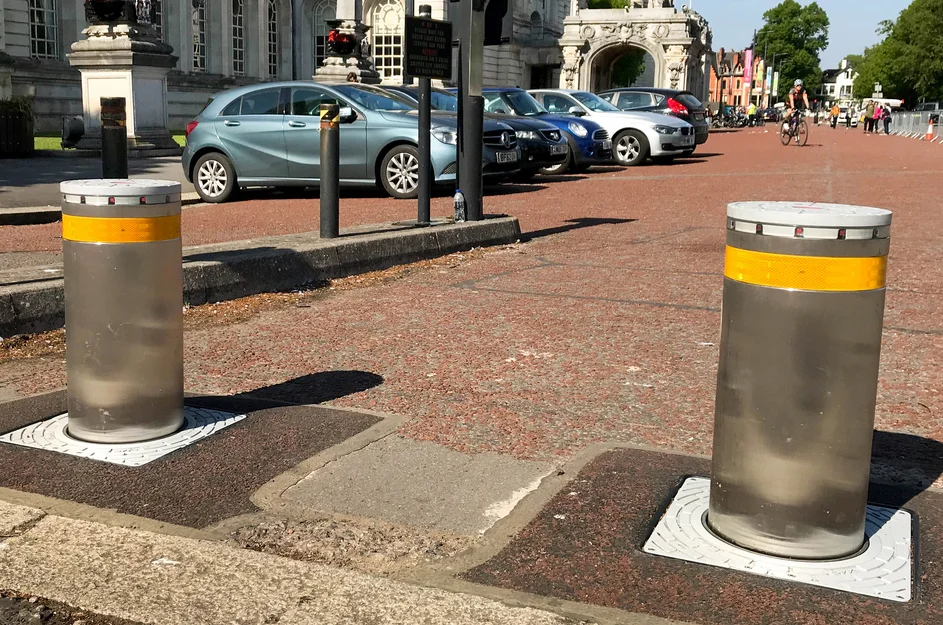
Among all physical security measures, security bollards remain one of the most effective ways of preventing hostile vehicle attacks.
Whether protecting a retail premises from a ram raid or safeguarding a crowded public space from a hostile vehicle attack, they create a physical barrier that cannot simply be bypassed by driving through it.
Modern Hostile Vehicle Mitigation systems are specifically engineered to absorb enormous impact forces while protecting pedestrians, buildings, and critical infrastructure.
This makes them suitable for locations including:
- Government buildings
- Shopping centres
- Stadiums
- Airports
- Commercial premises
- Distribution centres
- Public squares
- Retail parks
- Corporate headquarters
Government guidance published under Martyn’s Law also identifies bollards and other vehicle security barriers as recognised measures for reducing the consequences of hostile vehicle attacks as part of a wider layered security strategy.
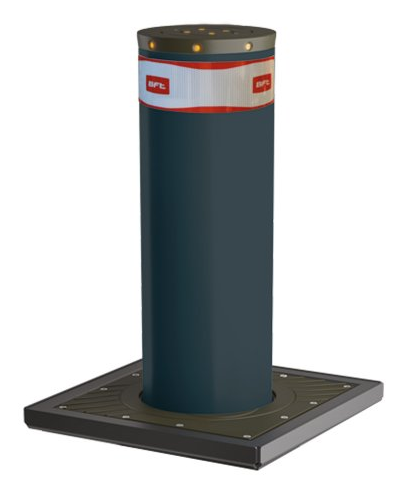
Featured Solution: XPASS 800 PASS-Certified Automatic Bollard
For locations requiring both high security and controlled vehicle access, automatic bollards offer a practical alternative to permanent barriers.
The XPASS 800 has been designed for high-security commercial environments where authorised vehicles require regular access without compromising perimeter protection.
Manufactured from high-strength galvanised steel, it has been independently crash-tested to withstand an impact from a 7,500kg vehicle travelling at 30mph, making it suitable for sites where hostile vehicle mitigation is a priority.
Unlike fixed bollards, the XPASS 800 rises and retracts automatically using remote controls or integrated access systems. This allows staff, emergency services, and authorised vehicles to enter safely while maintaining continuous protection when the bollard is raised.
Typical applications include:
- Government facilities
- Critical infrastructure
- Data centres
- Corporate headquarters
- Public buildings
- High-risk commercial premises
- Secure distribution facilities